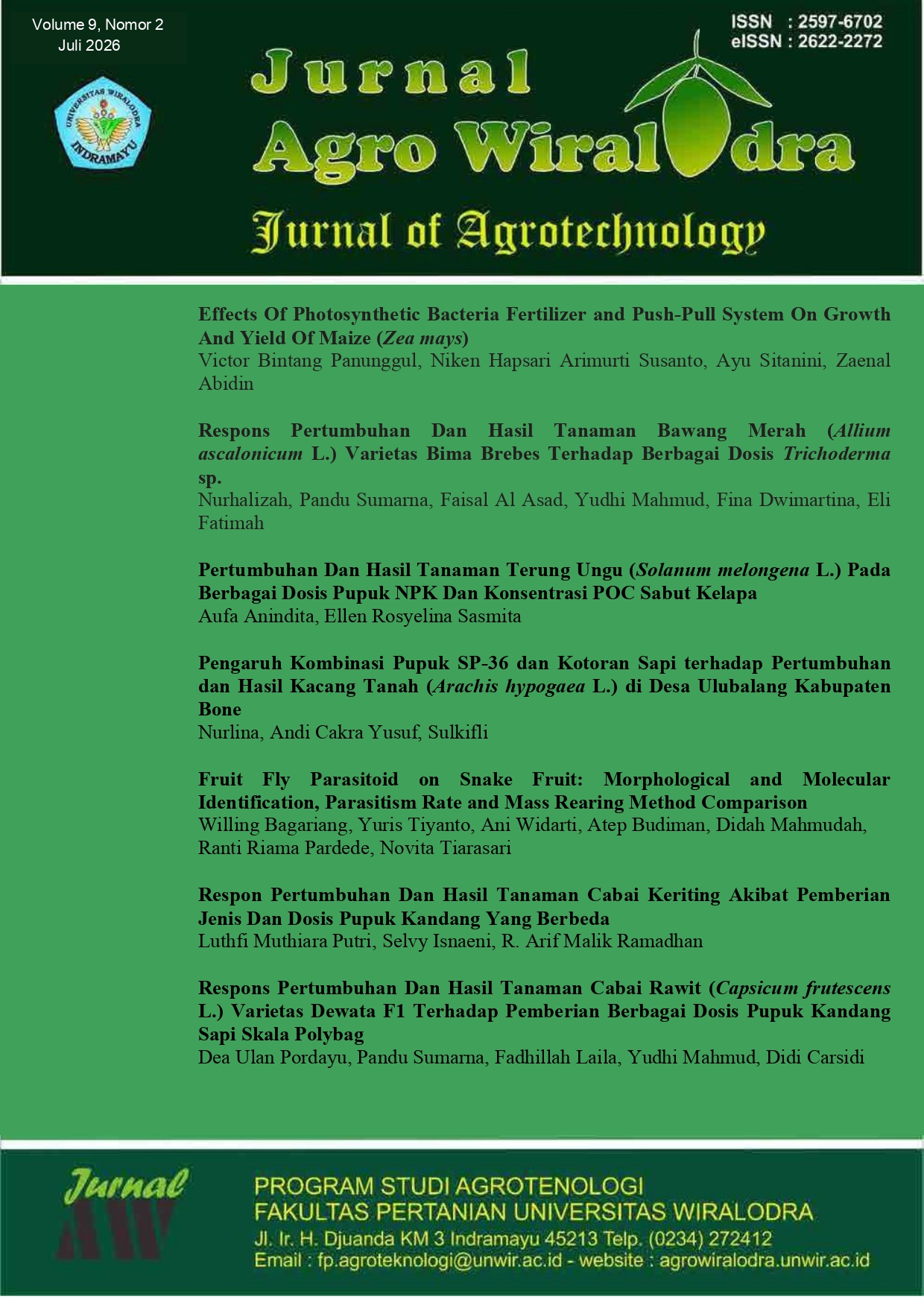
Effects Of Photosynthetic Bacteria Fertilizer and Push-Pull System On Growth And Yield Of Maize (Zea mays)
DOI:
https://doi.org/10.31943/agrowiralodra.v9i2.176Keywords:
Corn, Peanuts, Podzolic, Purbalingga, PSBAbstract
Marginal soils are characterized by low nutrient availability, which adversely affects crop productivity. The incorporation of organic materials and cultivation techniques plays an important role in maintaining soil health and crop yield. This study aimed to evaluate the effects of photosynthetic bacterial fertilizers and the push-pull system cultivation technique. The research was conducted in Banjaran Village, Purbalingga Regency, utilizing a completely randomized block design. Treatments tested included S0 (control), S1 (50 mL/2L), and S2 (100 mL/2L), as well as P0 (control), P1 (lemongrass), and P2 (peanuts). Each treatment was replicated three times and analyzed using ANOVA, with Duncan's Multiple Range Test (DMRT) (α=5%) applied for significant differences. The observed variables included fresh plant weight, leaf area, fresh root weight, age of male flowers, and chlorophyll a levels. The results indicate that the application of photosynthetic bacteria significantly affects the fresh weight of the plants and the age of male flowers. However, there is no significant effect on leaf area, fresh root weight, and chlorophyll a levels. The push-pull system cultivation technique significantly affects chlorophyll a levels, although no significant differences were found in fresh plant weight, leaf area, fresh root weight, and age of male flowers.
Downloads
Published
How to Cite
Issue
Section
License
Copyright (c) 2026 Jurnal Agro Wiralodra

This work is licensed under a Creative Commons Attribution 4.0 International License.

.png)