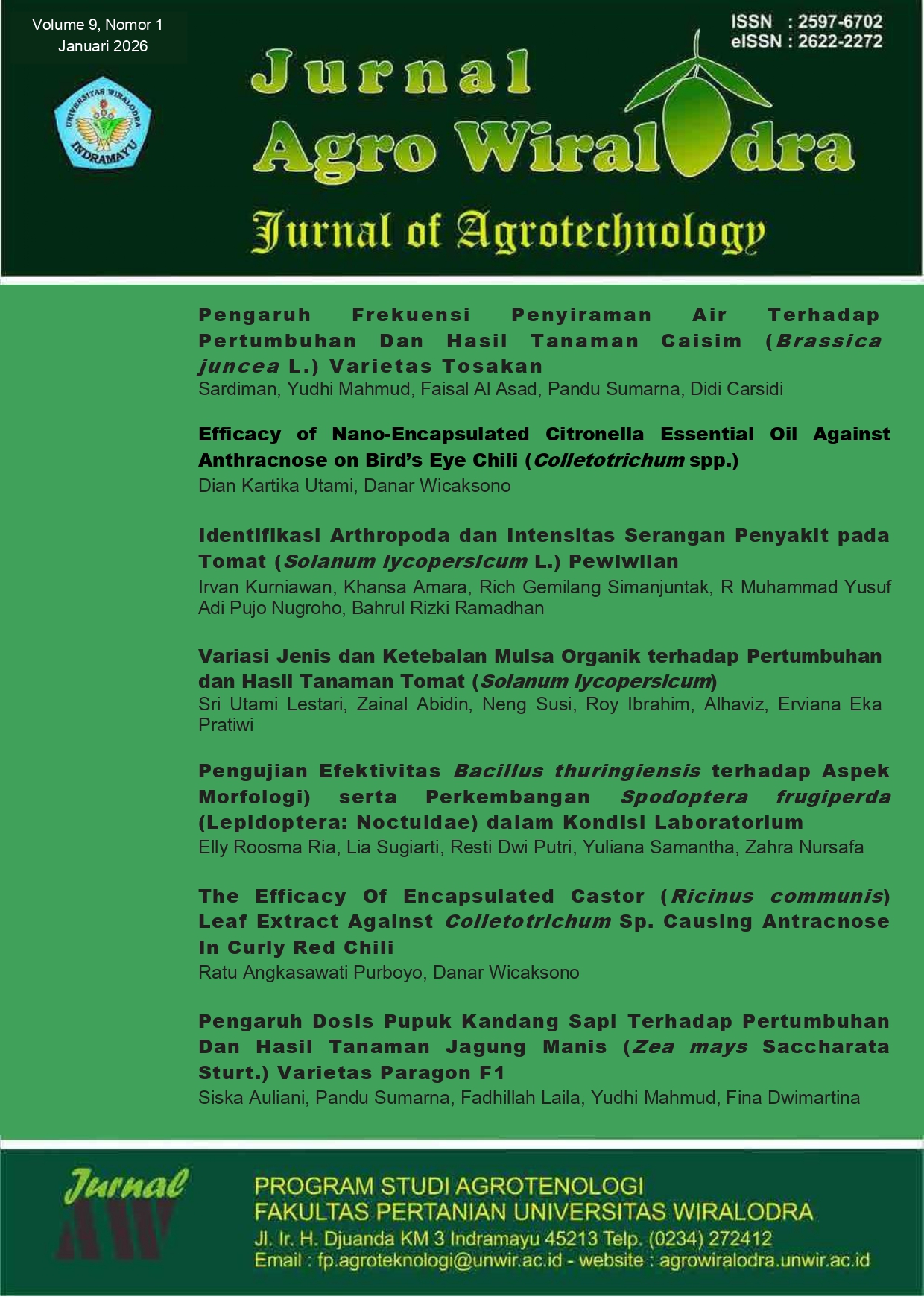
Identifikasi Arthropoda dan Intensitas Serangan Penyakit pada Tomat (Solanum lycopersicum L.) Pewiwilan
DOI:
https://doi.org/10.31943/agrowiralodra.v9i1.164Keywords:
Arthropods, Disease Intensity, Pests, Suckering, TomatoesAbstract
Tomatoes (Solanum lycopersicum) are a horticultural commodity with high economic value and are widely cultivated in Indonesia. However, tomato productivity is often limited by pest and disease attacks. This study aims to identify insect species and analyze the intensity of diseases that attack tomato plants. The research methodology used was quantitative descriptive research involving two main components, namely identification in the laboratory and direct observation in the field. The research findings showed that there were four types of arthropods with various roles in the tomato ecosystem, namely Spiders (Lycosa sp.) classified as Natural Enemies; Ants (Odontoponera sp.) classified as Predators; Grasshoppers (Oxya chinensis) classified as Pests; Moths (Order lepidoptera) classified as Pests. In addition to pests, brown spot disease (Alternaria solani) was also found. The results of observations of the intensity of disease attacks showed differences in each treatment, the intensity of disease attacks was highest in the treatment without mulch and suckering compared to other treatments.
Downloads
Published
How to Cite
Issue
Section
License
Copyright (c) 2026 Jurnal Agro Wiralodra

This work is licensed under a Creative Commons Attribution 4.0 International License.

.png)